
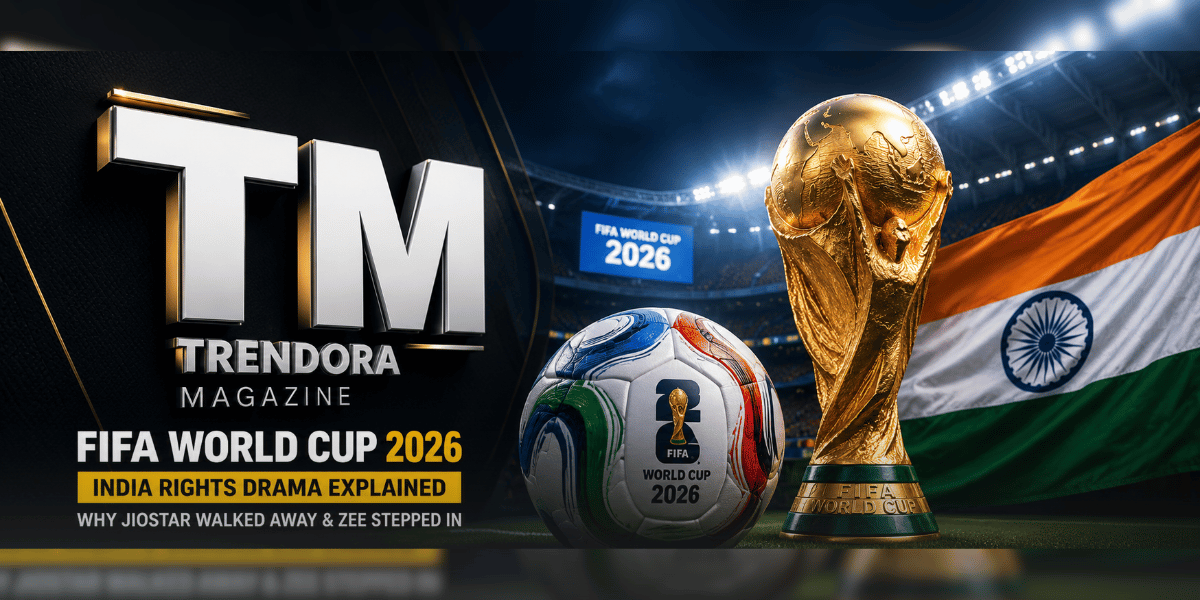
FIFA World Cup 2026 India Rights Drama: Why Broadcasters Hesitated Despite Football’s Growing Popularity
June 11, 2026
The Question Many Indian Football Fans Have Been Asking
When reports first emerged that India’s broadcast rights for the FIFA World Cup 2026 had not been finalized, many football fans were shocked.
After all, this isn’t just another sporting event.
The FIFA World Cup is the biggest football tournament on the planet.
Billions of viewers watch it globally. Major brands spend huge amounts on advertising. Countries stop to watch their teams compete.
So why would Indian broadcasters hesitate?
Why wasn’t there an immediate bidding war?
And why were reports suggesting that even media giants weren’t rushing to secure the rights?
The answer is far more complicated than many people realize.
What Really Happened During the FIFA Rights Negotiations?
For months, one of the biggest unanswered questions in Indian sports media wasn’t about a player, a team, or even a match.
It was about a broadcast deal.
As the FIFA World Cup 2026 moved closer, many industry insiders were surprised that India’s media rights remained unresolved. In most major markets, World Cup broadcasting deals are finalized well in advance. Yet in India, negotiations dragged on much longer than expected.
That immediately raised questions.
Was football losing popularity?
Were broadcasters no longer interested?
Or was something much bigger happening behind the scenes?
The reality appears to be far more complicated.

According to industry reports, FIFA initially entered negotiations with expectations that reflected India’s massive population, growing digital audience, and increasing interest in global football. Reports suggested the organization was seeking a rights package valued significantly higher than what Indian broadcasters were comfortable paying.
From FIFA’s perspective, the logic was understandable.
India may not be a football-playing superpower, but it is one of the world’s largest consumer markets. Millions of fans follow the Premier League, UEFA Champions League, and international tournaments every year. Social media engagement around football stars such as Lionel Messi, Cristiano Ronaldo, Kylian Mbappé, and Jude Bellingham continues to grow across the country.
The challenge was that broadcasters were looking at a completely different set of numbers.
They weren’t asking how many people like football.
They were asking how many people would watch live matches at 1:00 AM.
How many advertisers would pay premium rates for those broadcasts.
How many subscriptions could realistically be generated.
And most importantly:
Could the investment actually make money?
That difference in perspective became the heart of the negotiations.
For FIFA, India represented future growth.
For broadcasters, India represented a difficult business calculation.
That’s why the discussions took much longer than many fans expected.
The Time-Zone Problem Nobody Can Ignore
This is where geography becomes a major factor.
The 2026 FIFA World Cup will be hosted across the United States, Canada, and Mexico.
That sounds exciting for football fans.
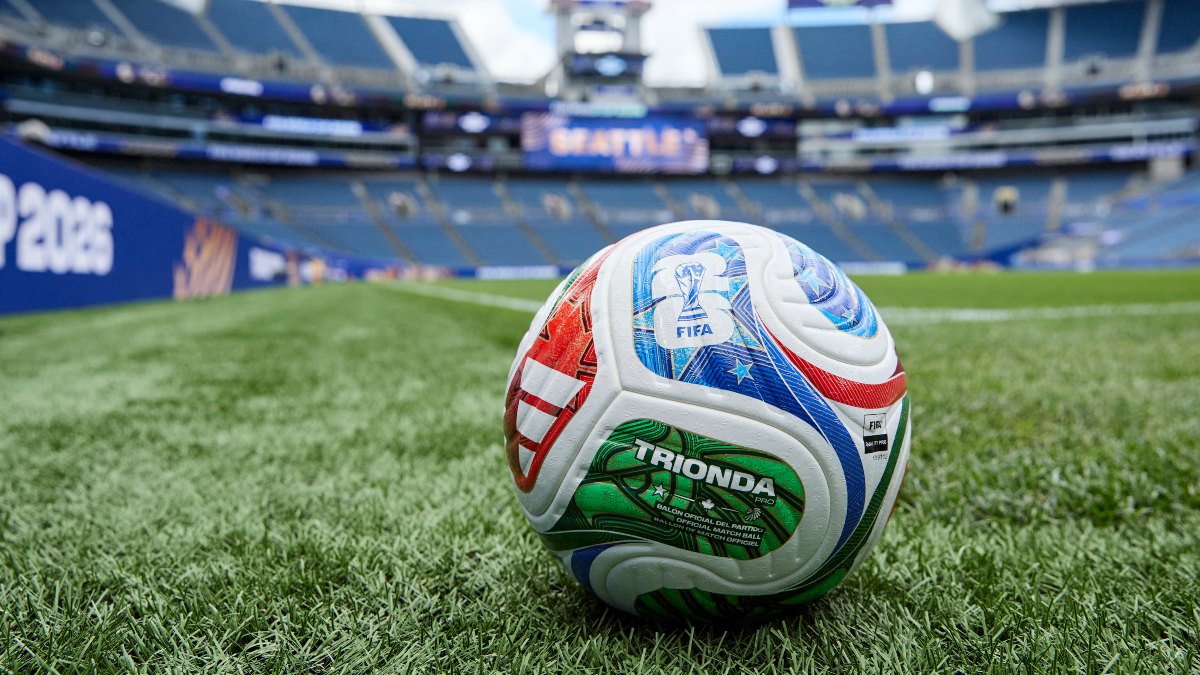)
For Indian broadcasters, however, it creates a challenge.
Many matches will take place during late-night and early-morning hours in India.
Some games could start when much of the country is asleep.
That matters because television ratings and digital audiences tend to be strongest when people are awake and available to watch.
Advertisers know this.
Broadcasters know this.
And FIFA knows this.
A World Cup match played at 1:00 AM or 3:00 AM Indian time may still attract dedicated football fans, but casual viewers are less likely to tune in.
That’s one reason industry observers repeatedly pointed to timing as a major factor during negotiations.
But Didn’t India Watch the 2022 World Cup in Huge Numbers?
Yes. And this is where the story becomes interesting. The 2022 FIFA World Cup in Qatar performed remarkably well in India. The tournament benefited from much friendlier timings for Indian audiences. Many matches were available during evening hours when viewers could comfortably watch. The Argentina vs France final became one of the most-watched sporting events on digital platforms in India. Millions of football fans streamed matches throughout the tournament. By most audience measurements, interest was strong. This is why some fans became confused when reports emerged that broadcasters were not aggressively chasing the 2026 rights.

The audience clearly existed. So what changed? Industry experts believe the FIFA World Cup 2026 India Rights package highlighted the growing gap between audience interest and commercial value. The debate around FIFA World Cup 2026 India Rights wasn’t just about football—it was about business strategy.
The answer again comes back to economics.
Viewership Doesn’t Always Equal Profit
One of the biggest misconceptions in sports media is that high viewership automatically means huge profits.
That’s not always true.

A broadcaster may attract millions of viewers and still struggle to recover costs if the rights fee is extremely expensive.
Advertising revenue has limits.
Subscription growth has limits.
Sponsorship opportunities have limits.

If rights costs rise faster than revenue opportunities, broadcasters become cautious.
Industry discussions suggested that many companies were carefully evaluating whether the numbers made sense for 2026.
The concern wasn’t football itself.
The concern was return on investment. The FIFA World Cup 2026 India Rights negotiations quickly became one of the most discussed topics in sports broadcasting.
Even after Zee secured the FIFA World Cup 2026 India Rights, discussions about the economics behind the deal continued.
The Hidden Cricket Comparison Nobody Talks About
One factor rarely mentioned publicly is that every major sports rights purchase in India is ultimately compared to cricket.
Whether broadcasters admit it or not, IPL has become the benchmark.
When executives evaluate a major sports property, they don’t simply ask whether it will attract viewers.

They ask whether it can deliver IPL-level advertising demand, sponsorship interest, and audience consistency.
Football often succeeds in the first category.
The second category is far more difficult.
A FIFA World Cup final can attract enormous attention.
A Lionel Messi match can trend across social media for hours.
But advertisers generally prefer events that consistently deliver audiences at predictable times.
That’s one reason football creates a unique challenge in India.

The passion is undeniable.
The business model is less certain.
And that uncertainty played a significant role in the FIFA rights discussions.
Did JioStar Lose Money on the Last World Cup?
Many social media posts claim that Jio or Viacom18 suffered major losses after acquiring previous FIFA rights.
However, there has never been a widely confirmed public figure showing a massive financial loss directly tied to the tournament.
In fact, the 2022 World Cup delivered significant audience engagement.
Millions of viewers tuned in.

Digital streaming records were broken.
Football conversations exploded across social media.
From a viewership perspective, the tournament was widely considered successful.
The real issue appears to have been future projections.
Media companies were looking ahead to 2026 and asking whether similar audience numbers would be achievable given the much less favorable match timings.
That’s a very different question.
Why Zee Saw an Opportunity Others Didn’t
While much of the conversation focused on broadcasters that appeared cautious, Zee approached the situation differently.
Instead of looking only at the immediate risks, the company appears to have focused on the long-term opportunity.
That’s an important distinction.
The deal wasn’t simply about broadcasting the FIFA World Cup 2026.
View this post on Instagram
It was also about securing a stronger position within India’s sports media landscape.
Football audiences in India are younger than many traditional television audiences. They are highly active online, consume content across multiple platforms, and often follow international leagues throughout the year.
For a broadcaster looking to strengthen its sports portfolio, that audience is extremely valuable.
View this post on Instagram
Even if short-term profits are uncertain, long-term audience growth can justify the investment.
That’s why Zee’s decision may eventually be viewed as more than a broadcasting acquisition.
It may be remembered as a strategic bet on where sports consumption in India is heading over the next decade.
Is Football Really Growing in India?
Absolutely.
Cricket remains the dominant sport.
That isn’t changing anytime soon.
But football’s growth over the past decade is impossible to ignore.
The Premier League, UEFA Champions League, FIFA World Cup, and European Championship all attract dedicated audiences in India.
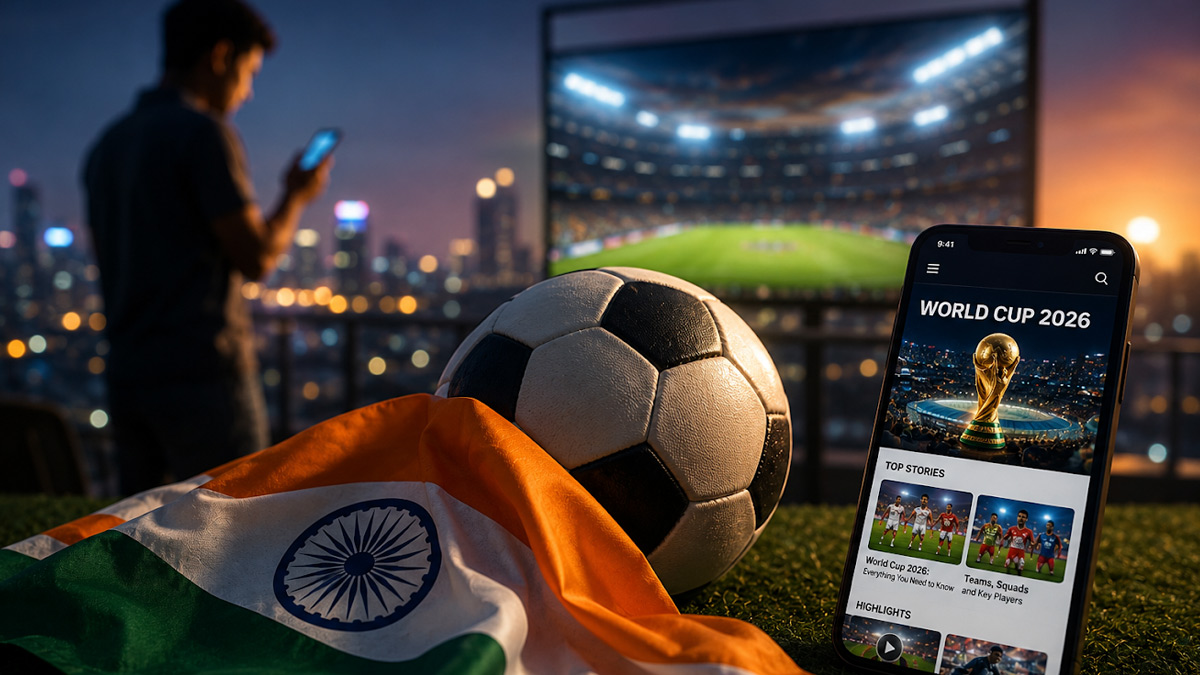
Young viewers are increasingly following international clubs and players.
Social media has accelerated this trend dramatically.
Today’s Indian football fan has access to highlights, analysis, podcasts, and live discussions from around the world.
The audience may not yet match cricket’s scale, but it is larger and more engaged than many people realize.
The Bigger Story Behind the Rights Drama
The biggest misconception surrounding this story is that football isn’t popular in India.
That’s simply not true.
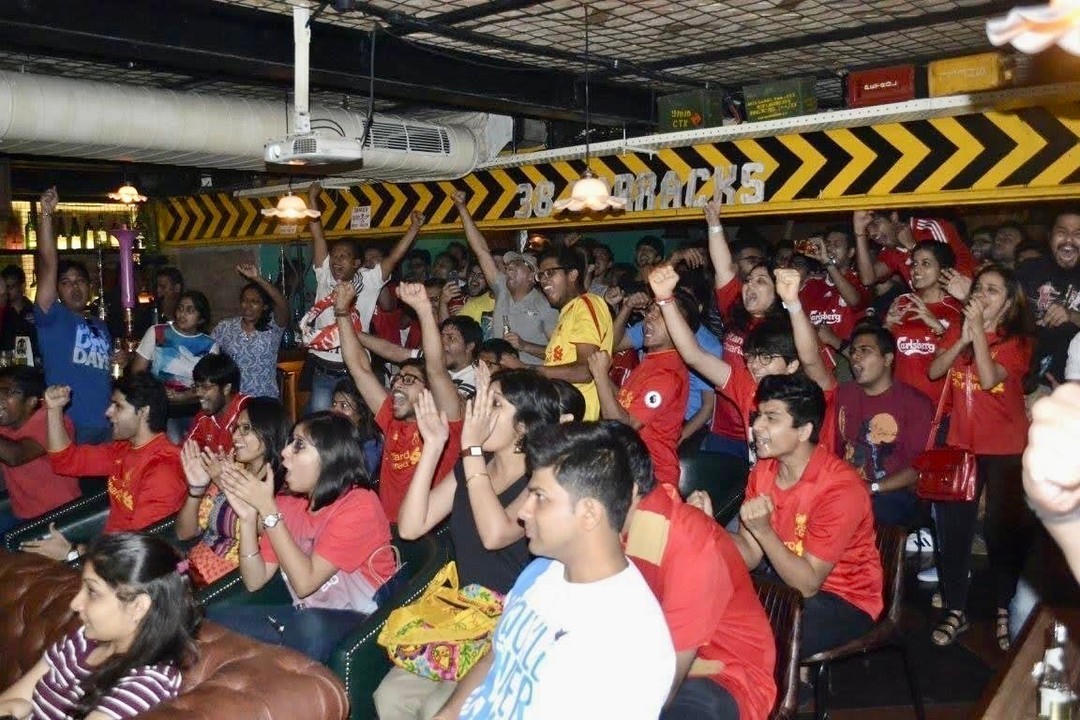
Millions of Indians follow European clubs. Millions stay awake to watch World Cup matches. Millions celebrate goals, debate transfers, and support their favorite players with the same passion seen anywhere else in the world.
The real challenge was never audience interest.
The challenge was turning that interest into a profitable broadcasting business.
That’s what made the FIFA World Cup 2026 rights saga so fascinating.

It wasn’t a story about football losing relevance.
It was a story about media companies trying to determine what that relevance is actually worth.
And in many ways, that question may shape the future of sports broadcasting in India long after the final whistle of the 2026 World Cup.
FAQs
Why were FIFA World Cup 2026 rights delayed in India?
Reports suggested broadcasters and FIFA were negotiating pricing and evaluating the business impact of late-night match timings.
Why is the 2026 World Cup timing a challenge for India?
The tournament is being hosted in North America, meaning many matches will be played during late-night or early-morning hours for Indian viewers.
Did the 2022 FIFA World Cup perform well in India?
Yes. The tournament attracted strong viewership, particularly during major matches such as the Argentina vs France final.
Did JioStar officially confirm losses from FIFA World Cup 2022?
No widely confirmed public figure has been released showing a specific loss directly linked to the tournament.
Who secured the FIFA World Cup 2026 rights in India?
Zee ultimately emerged as the broadcaster associated with the FIFA World Cup rights package for the Indian market.
Is football growing in India?
Yes. While cricket remains dominant, football continues to attract a growing and highly engaged audience across television and digital platforms.
Want more trending stories and celebrity updates? Explore the latest on Trendora Magazine.
Published by Trendora Magazine
Image & Video Credits: AI-Generated
⚽Looking for live scores, fixtures and standings? Visit our FIFA World Cup 2026 Live Hub. Check Live FIFA World Cup 2026.
🔴 Live Match Scores