

Why Japanese Fans Clean Stadiums After Games: The Inspiring Tradition That Continues to Earn Global Respect
Why Japanese Fans Clean Stadiums After Games: The Tradition Behind the Respect
June 15, 2026
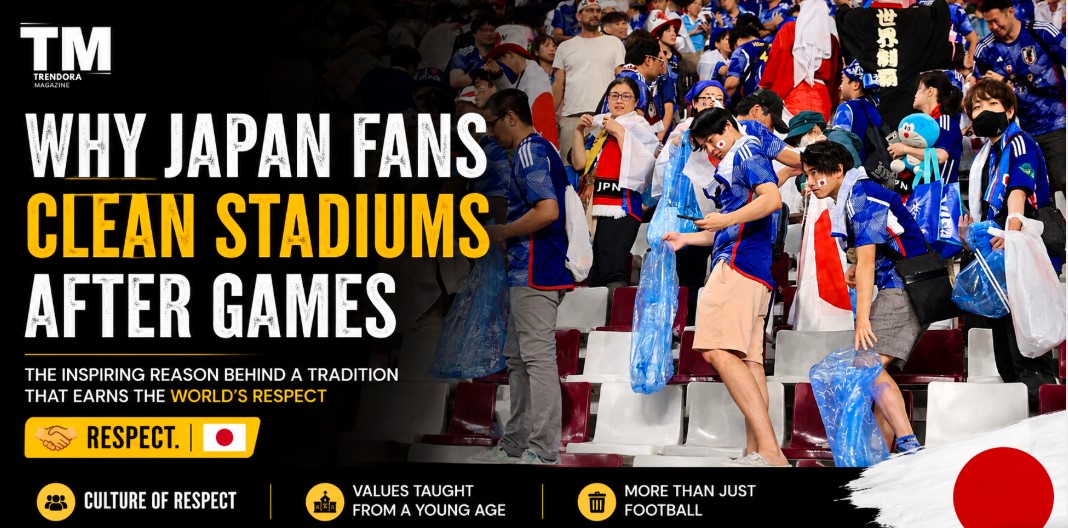
Why Japan Fans Clean Stadiums After Games is a question millions of football fans have asked after FIFA recently shared a viral video showing Japanese supporters cleaning up stadium seats following a match. While the gesture may seem simple, the story behind it reveals a powerful culture of respect, responsibility, and community that has inspired people around the world.
A short video shared by FIFA recently captured a moment that has become familiar to football fans around the world. In the clip, Japanese supporters can be seen carefully collecting trash and cleaning the stadium after a match while many other spectators are already heading home.
The reason Japan fans clean the stadium after each game. Respect. 🤝🇯🇵 pic.twitter.com/o9qJUOLefY
— FIFA (@FIFAcom) June 15, 2026
FIFA accompanied the post with a simple but powerful message:
“The reason Japan fans clean the stadium after each game. Respect.”
The video quickly gained attention online, with thousands of fans praising the gesture and wondering the same thing: Why do Japanese fans do this?
At first glance, it may seem like a small act of kindness. But the truth runs much deeper. What the world sees inside football stadiums is actually a reflection of values that have been taught in Japanese society for generations.
The story behind this tradition isn’t really about football at all. It’s about culture, responsibility, community, and respect.
Why Japan Fans Clean Stadiums After Games
When Japanese fans stay behind after a game to pick up trash, they aren’t doing it for social media attention.
In fact, many supporters have been doing this long before smartphones and viral videos existed.
Japanese fans are cleaning the stadium after their match pic.twitter.com/vWQHhjiZdb
— Barstool Sports (@barstoolsports) June 15, 2026
The habit comes from a cultural belief that shared spaces belong to everyone and therefore everyone has a responsibility to help maintain them.
In Japan, people are often taught from a young age that cleanliness is not someone else’s job. It is everyone’s responsibility.
This philosophy can be seen throughout everyday life in the country.
Visitors are often surprised by how clean Japanese streets, train stations, parks, and public spaces appear despite the fact that public trash bins are relatively uncommon. Rather than expecting someone else to clean up after them, many people simply carry their waste until they can dispose of it properly.
That same mindset follows Japanese supporters into football stadiums around the world.
The School System That Teaches Responsibility
One of the biggest reasons behind this behavior starts in childhood.
Unlike many countries where janitors handle most classroom cleaning, Japanese students are often responsible for cleaning their own classrooms, hallways, cafeterias, and school grounds.
The practice is known as “Osoji,” which translates to cleaning time.

Children learn early that cleaning is not a punishment. Instead, it is part of being a responsible member of a community.
By participating in daily cleaning activities, students develop respect for shared spaces and appreciation for the effort required to keep environments clean.

Years later, those same children become adults who naturally carry these habits into workplaces, neighborhoods, public transportation systems, and even football stadiums.
For many Japanese fans, cleaning after a match isn’t considered extraordinary. It’s simply what they believe responsible people should do.
The World First Took Notice During the World Cup
Although Japanese supporters had been practicing this tradition for years, much of the world first noticed it during FIFA World Cup tournaments.
After matches in Brazil, Russia, Qatar, and other host nations, cameras repeatedly captured Japanese fans remaining in the stands with large blue trash bags.
While celebrations were happening outside the stadium, these supporters were quietly collecting cups, wrappers, bottles, and other litter left behind in seating areas.
The contrast of cultures could not be more apparent! 😳😳
Honorable Japanese fans clean up after the game! Meanwhile, NYC gets TRASHED after the Nicks win! 🤦🏻♀️
Much respect to the Japanese culture.
Watch til the end! 👇🏼 pic.twitter.com/zCiXAbL03g
— Shawnee Gregorio (@GregorioSh64773) June 15, 2026
The images quickly spread across international media.
Many football fans were shocked to see supporters voluntarily cleaning sections that didn’t even belong to them.
Even more remarkable was the fact that Japanese fans often cleaned not only their own trash but also waste left behind by others.
The gesture became one of the most respected examples of sportsmanship seen at major tournaments.
Respect for the Host Nation
Another important reason behind the tradition is respect.
Japanese culture places significant emphasis on showing appreciation to hosts and communities.
When traveling abroad for football tournaments, supporters often view themselves as representatives of Japan.
Their behavior reflects not only on them as individuals but also on their country.

Leaving a venue cleaner than they found it is seen as a way of expressing gratitude toward stadium staff, volunteers, organizers, and host nations that welcome them.
Rather than focusing only on what they receive from an event, many supporters focus on what they can contribute.
That mindset has earned admiration from football fans worldwide.
It’s Not About Recognition
One reason this tradition continues to resonate with people is its authenticity.
Most Japanese supporters do not clean stadiums because they expect praise.
In fact, many appear genuinely surprised when international media treats their actions as extraordinary.
For them, cleaning up afterward is simply normal behavior.

That authenticity is what makes the gesture so powerful.
In an age where many acts of kindness are often documented for attention online, Japanese fans have built a reputation for doing the right thing whether cameras are present or not.
The FIFA video that recently went viral is just another example of a tradition that has existed quietly for decades.
The Impact on the Global Football Community
The influence of Japanese supporters has extended far beyond Japan itself.
Over the years, fans from other countries have begun organizing cleanup efforts after matches inspired by what they witnessed from Japanese supporters.
Some clubs have even launched campaigns encouraging fans to leave stadiums cleaner than they found them.

What started as a cultural habit has gradually become an international symbol of respect and civic responsibility.
It demonstrates how small actions can inspire meaningful change.
A single trash bag may not seem significant, but when millions of people witness acts of responsibility on the world’s biggest sporting stages, those actions can influence behavior far beyond the stadium walls.
Why the Tradition Matters Today
The reason this story continues to resonate is because it reminds people of something simple yet important.
Respect is not shown only through words.
It is shown through actions.
Whether it’s helping a neighbor, respecting public spaces, or cleaning up after yourself, small acts can reveal a great deal about personal values.

Japanese football supporters have become global ambassadors for this idea.
Every tournament, every stadium, and every cleanup effort sends the same message:
A community works best when everyone takes responsibility for it.

That’s why FIFA’s recent post attracted so much attention.
It wasn’t merely a video about fans collecting trash.
It was a reminder that sports can showcase some of humanity’s best qualities.
And sometimes, the most memorable moments don’t happen on the pitch—they happen in the stands after the final whistle.
FAQs
Why do Japanese fans clean stadiums after football matches?
Japanese fans clean stadiums because cleanliness, responsibility, and respect for shared spaces are deeply rooted cultural values in Japan. Many supporters see it as a natural responsibility rather than an extraordinary act.
Did FIFA post a video about Japanese fans cleaning stadiums?
Yes. FIFA recently shared a video showing Japanese supporters cleaning up after a match with the caption: “The reason Japan fans clean the stadium after each game. Respect.” The post quickly gained attention across social media.
Is cleaning public spaces common in Japan?
Yes. Cleanliness is an important part of daily life in Japan. Many schools require students to clean classrooms and common areas, helping instill responsibility from a young age.
What is Osoji in Japan?
Osoji is the Japanese practice of cleaning shared spaces. Students often participate in regular cleaning activities at school, which helps teach discipline, respect, and teamwork.
When did the world first notice Japanese fans cleaning stadiums?
The tradition gained global attention during FIFA World Cup tournaments, particularly in Brazil, Russia, and Qatar, when international media highlighted Japanese supporters cleaning stadium sections after matches.
Do Japanese fans clean only their own trash?
No. In many cases, supporters also collect litter left behind by other spectators, helping leave the area cleaner than they found it.
Why is the tradition admired worldwide?
People admire the tradition because it demonstrates respect, responsibility, humility, and community spirit. Many see it as an inspiring example of sportsmanship both inside and outside the stadium.
Has the tradition inspired fans from other countries?
Yes. Supporters from various nations have adopted similar cleanup efforts after witnessing Japanese fans’ actions during international tournaments.
Is the stadium cleanup organized by football associations?
Generally, no. Most cleanup efforts are voluntary and driven by supporters themselves rather than official football organizations.
What lesson can people learn from Japanese football fans?
The biggest lesson is that small actions matter. Taking responsibility for shared spaces and showing respect through actions can create a positive impact on communities and inspire others to do the same.
Want more trending stories and celebrity updates? Explore the latest on Trendora Magazine.
Published by Trendora Magazine
Image & Video Credits: X/FIFA