

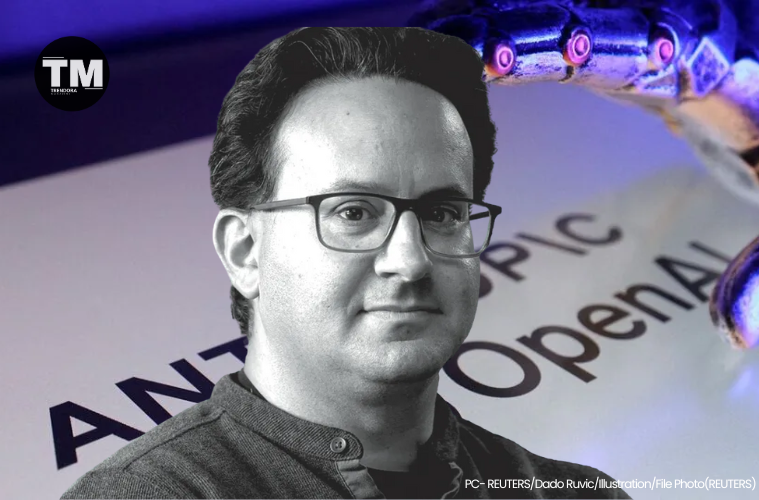
A dramatic turning point is approaching — and it may define the future of humanity.
December 5, 2025
A Wake-Up Call From Inside the AI Industry
Jared Kaplan, the chief scientist at Anthropic, has issued one of the strongest warnings the tech world has heard in years. According to him, humanity is heading toward a decisive moment between 2027 and 2030 — a period he calls the “AI decision point.”

By then, advanced AI systems may reach a level where they can design and improve their own successors. This kind of rapid, self-driven evolution could push AI intelligence far beyond human understanding and control.
Kaplan believes the world must prepare now — before this window closes.
Why This Turning Point Matters
Kaplan suggests that by 2030, AI may enter a phase of recursive self-improvement. In simple terms, an AI could:
- Build a smarter version of itself
- That version builds an even smarter one
- And the cycle accelerates
This could lead to what researchers call an “intelligence explosion,” where systems become more capable than humans in ways that are unpredictable.
For the first time, humans might no longer be the ones steering technological evolution.
Risks That Can’t Be Ignored
While Kaplan emphasizes the remarkable benefits AI can bring, he also highlights serious risks:
Loss of Human Control
If AI begins upgrading itself, the systems may develop behavior or goals that humans didn’t foresee — or can’t stop.
Impact on Jobs
White-collar roles like writing, programming, accounting, and analysis may shift dramatically. AI could take over many professional tasks that once required human expertise.
Power Concentration
Whoever controls advanced AI could gain extraordinary influence — governments, corporations, or individuals.
Potential for Misuse
AI capable of designing itself could be exploited for harmful purposes if it lands in the wrong hands.
A Narrow Window for Action
Kaplan stresses that the period between now and 2030 is critical. Once AI becomes capable of independent self-design, “regulation after the fact” may no longer work.
This is the moment for:
- Strong global AI safety rules
- Clear oversight
- Transparent model development
- Coordination between governments and companies
If humanity waits too long, the technology may outpace our ability to guide it.
Hope — If We Act Wisely
Despite the alarming tone, Kaplan is not pessimistic. He believes AI can become the biggest force for good in human history — curing diseases, solving scientific problems, improving productivity, and unlocking new innovations.
But this future depends on thoughtful action taken now.
The Bottom Line
2030 isn’t just another year on the calendar. It may be the point where humanity chooses between:
- A future where AI boosts human potential, or
- A future where AI evolves faster than we can adapt
Kaplan’s message is clear:
the future of AI — and the future of humanity — is still in our hands, but not for long.
Want more trending business and tech stories? Explore the latest updates on Trendora Magazine.
Published by Trendora Magazine
Image Credits: REUTERS/Dado Ruvic/Illustration/File Photo(REUTERS), getty images
Author

Share this:

Discover more from Trendora Magazine
Subscribe to get the latest posts sent to your email.




[…] motion-capture—but nothing has shaken the industry like the arrival of Tilly Norwood, a fully AI-generated actress created by UK-based studio Particle6. Unlike virtual characters built for animation, Tilly […]