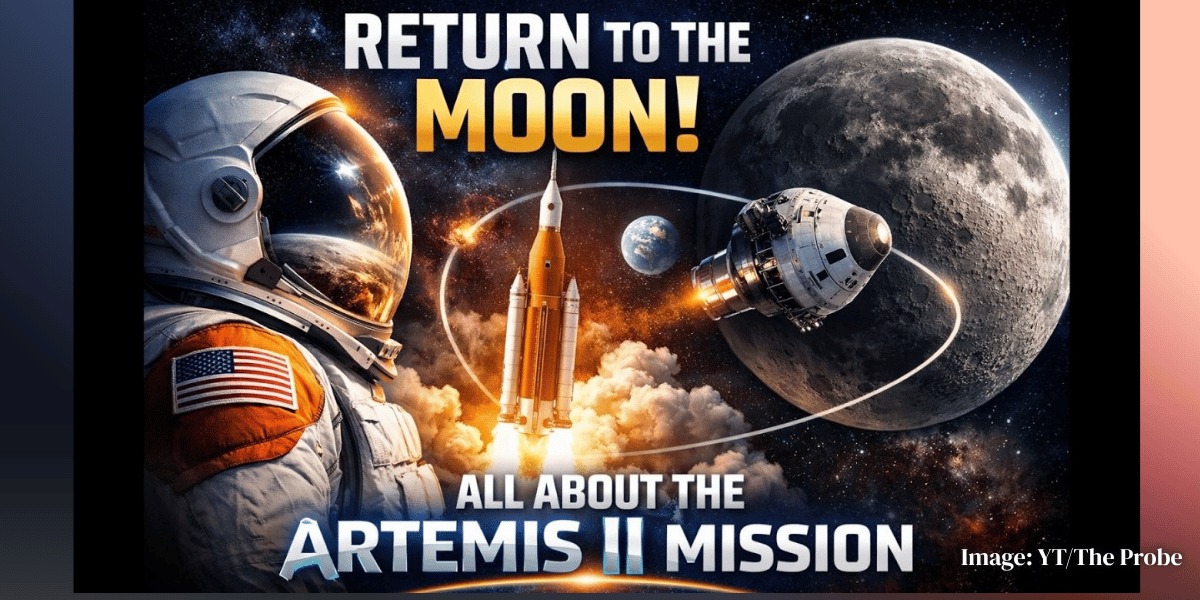
Artemis II Mission Explained: NASA’s Return to the Moon
A New Look at Earth: Inside NASA’s Artemis II Mission
April 4, 2026
In a moment that feels both quiet and powerful, NASA recently shared a glimpse of astronauts looking back at Earth from deep space during the Artemis II mission. The caption, “Seeing home from space hits different,” perfectly captures the emotional weight of what humanity is experiencing once again — venturing beyond Earth’s orbit and reconnecting with our place in the universe.
As astronauts Christina Koch and Reid Wiseman gaze through the Orion spacecraft window, Earth appears as a bright, distant sphere. It’s a reminder of how small yet significant our world truly is. But beyond the visual impact, this moment represents a historic turning point in space exploration.
The Artemis program is NASA’s long-term initiative to return humans to the Moon and establish a sustainable presence there. Unlike the Apollo missions, which were focused on short-term exploration, Artemis is designed with the future in mind.
NASA
The program aims to land the first woman and the first person of color on the Moon, marking a more inclusive chapter in space history. It also focuses on building infrastructure that will allow astronauts to live and work on the lunar surface for extended periods.
More importantly, Artemis is seen as a stepping stone toward Mars. By learning how to survive and operate on the Moon, scientists and engineers can better prepare for deeper space missions.
What Makes Artemis II So Important?
Artemis II is the first crewed mission of the Artemis program, making it a major milestone. While Artemis I successfully tested the Orion spacecraft without a crew, Artemis II takes things further by sending astronauts into deep space for the first time in over five decades.
The mission is designed as a lunar flyby. The spacecraft will travel around the Moon and return to Earth, testing all critical systems with humans onboard. This includes navigation, life support, communication, and safety procedures.
This mission is essential before attempting a Moon landing in Artemis III. It ensures that both the spacecraft and the crew are fully prepared for more complex operations.
Meet the Artemis II Crew
The Artemis II mission features a diverse and experienced team of astronauts who represent the future of space exploration.
Image: Nasa
Christina Koch brings extensive experience, having completed one of the longest spaceflights by a woman. Reid Wiseman, serving as commander, is a seasoned astronaut with leadership experience. Victor Glover makes history as the first Black astronaut assigned to a lunar mission, while Jeremy Hansen becomes the first Canadian astronaut to participate in a Moon mission.
Together, they symbolize international collaboration and a more inclusive approach to space travel.
The Orion Spacecraft Explained
At the center of the mission is the Orion spacecraft, NASA’s next-generation vehicle designed for deep space exploration.
NASA
Orion is built to carry astronauts farther than ever before. It includes advanced life-support systems, improved navigation technology, and enhanced safety features. One of its most notable elements is its window design, which offers astronauts a direct and breathtaking view of space and Earth.
These windows are not just for observation; they play a psychological role as well, helping astronauts stay connected to home during long missions.
Why This Moment Resonates Globally
The image of astronauts looking back at Earth is not new, but it remains deeply impactful. Similar to the iconic Earthrise photo from the Apollo era, moments like these reshape how we view our planet.
From space, borders disappear. Conflicts seem distant. What remains is a shared home floating in the vastness of space.
This perspective has historically influenced environmental awareness and global unity. Artemis II continues that legacy, reminding us of both our fragility and our potential.
What Comes After Artemis II?
Artemis II is only the beginning of a much larger journey.
The next mission, Artemis III, aims to land astronauts on the Moon, including the first woman to set foot on its surface. Beyond that, NASA plans to build the Lunar Gateway, a space station orbiting the Moon, and develop sustainable habitats on the lunar surface.
These steps are crucial for preparing future missions to Mars, which remains the ultimate goal of human space exploration.
The Artemis program represents more than technological advancement. It reflects a renewed global interest in space, driven by collaboration between governments and private companies.
It also signals a shift from exploration to expansion — from visiting space to eventually living and working there.
For now, however, the simple act of looking back at Earth from space is enough to inspire millions. It reminds us where we come from and how far we can go.
Stay tuned for more celebrity updates and trending stories right here on Trendora Magazine.
Trendora Magazine is a digital media platform focused on entertainment, celebrities, movies, music, lifestyle, fashion, and everything trending worldwide. The magazine delivers timely news, explainers, and culture-driven stories with a global perspective, covering Hollywood, international entertainment, and viral internet moments.
Founded with the vision to inform and entertain modern readers, Trendora Magazine blends pop culture insights with emerging trends in technology, media, and online culture. The platform aims to become a trusted destination for readers seeking engaging stories, trending topics, and fresh perspectives across digital platforms.
Trendora Magazine is launching officially on December 25, 2025, with a strong focus on original content, responsible reporting, and audience-first storytelling.