Puerto Rican superstar Bad Bunny made history with a halftime show at the 2026 Super Bowl, performing primarily in Spanish and celebrating Latin culture. The performance sparked global praise and political debate
February 9 , 2026
Inside the Cultural Performance
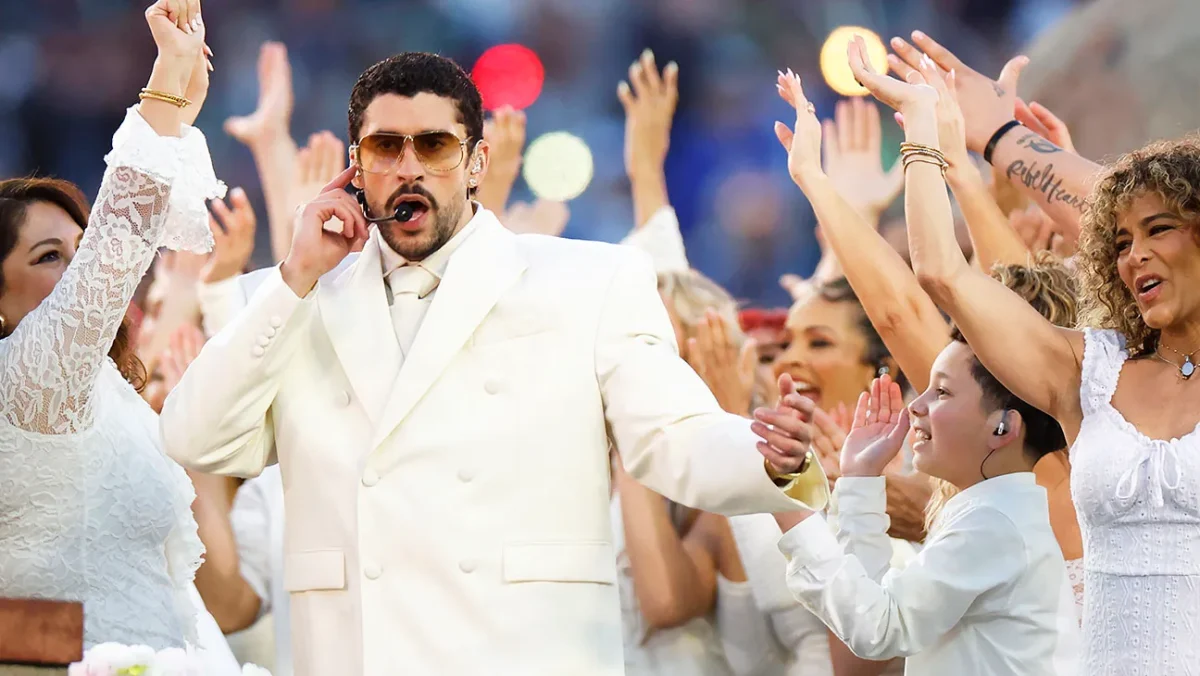
From the first second, it was clear that Bad Bunny’s Super Bowl 2026 halftime show would be unique. The stage featured vibrant neighbourhood and a traditional Puerto Rican “casita.” It blended reggaeton, salsa, and Latin pop. Each song stayed true to its roots. In other words, Bad Bunny invited the audience into his world rather than simplifying his music for mainstream expectations.

Additionally, major guest appearances elevated the performance. Lady Gaga and Ricky Martin performed alongside him. Surprise cameos included Pedro Pascal, Cardi B, Karol G, and Jessica Alba. Together, they celebrated Latin culture and Puerto Rican pride.
Symbolism That Speaks Volumes
Although Bad Bunny avoided political speeches, symbolism played a central role. His beige sweater with the number “64” drew attention. Many interpreted it as a reference to the official hurricane death toll in Puerto Rico. Meanwhile, the stage visuals highlighted the island’s resilience, infrastructure, and history. They subtly honoured Puerto Rico’s recovery after Hurricane Maria.
Furthermore, the show ended with a unifying message. Bad Bunny said, “God bless America,” in English. Then, he named countries across North, Central, and South America. Dancers carried flags, and the slogan “Together, We are America” appeared on screen.

Political Backlash Fuels Debate
Not everyone praised the performance. U.S. President Donald Trump criticized the halftime show on social media. He called it “absolutely terrible” and mocked the Spanish lyrics.
However, the backlash sparked immediate online reactions. Fans defended Bad Bunny, noting that Spanish is widely spoken in the United States. Others emphasized that Puerto Rico is part of the country, making Bad Bunny fully American. Consequently, the debate highlighted cultural and political tensions about language, identity, and national representation.

Why This Halftime Show Matters
The performance came at the peak of Bad Bunny’s career. Recently, he won multiple Grammy Awards, including Album of the Year. This made him the first Spanish-language artist to achieve that milestone.
Beyond music, Bad Bunny’s influence shapes cultural and social conversations. For many, the Super Bowl halftime show represented progress and inclusion. For others, it challenged traditional ideas of patriotism and national identity.
Ultimately, Bad Bunny controlled the moment. By staying true to his roots, he delivered a performance that transcended music. In conclusion, the show left a lasting cultural statement.
Author

Share this:

Discover more from Trendora Magazine
Subscribe to get the latest posts sent to your email.