

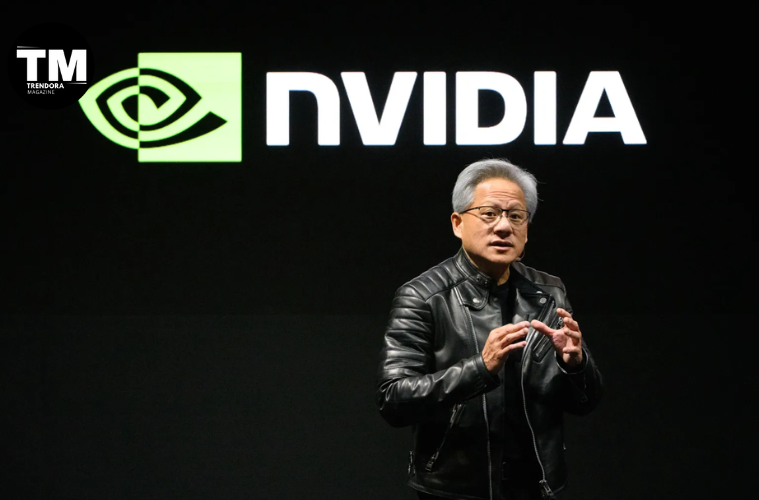
As Beijing builds fast, America’s lead in AI could be under threat, warns Jensen Huang.
December 7, 2025
Nvidia’s boss Jensen Huang has issued a stark warning: although the US remains ahead in AI-chip design, China’s lightning-fast infrastructure build-out could tilt the balance of power. According to Huang, the gap between leading in AI technology and winning the AI race globally is narrowing — not because of superior chips, but because of speed, scale, and energy infrastructure.

When infrastructure outruns innovation
Huang pointed out that while building an AI data center in the US might take years, China can complete huge projects in record time — a speed difference that could become a decisive advantage in scaling AI worldwide. With faster construction, larger energy capacity, and streamlined execution, China may soon rival — or even surpass — nations that once dominated AI development.
What this means for the future of AI dominance
The warning highlights a subtle yet powerful shift: AI supremacy won’t be determined solely by cutting-edge chips and software, but by who can roll out infrastructure and support systems fastest. If China continues on its current trajectory, it could offer massive computing power, data-centre capacity, and energy backing — making it a formidable contender in the global race for AI.
Challenges for the US and global AI ecosystem
For the US, Huang’s concerns raise questions about regulatory delays, permitting bottlenecks, energy constraints, and slower infrastructure development. If the US doesn’t adapt — by accelerating approvals, scaling energy supply, and investing in infrastructure — it might struggle to keep pace, even if its technology remains leading-edge.
What’s next — a call to action for America
With the spotlight back on infrastructure, 2026 could be a turning point. The US — and global tech leaders — may need to rethink strategy: not just innovating at the chip and software level, but also rapidly expanding real-world capacity. According to Huang’s warning, without bold moves in construction, energy, and deployment, technological superiority may no longer guarantee global dominance in AI.
Want more trending business and tech stories? Explore the latest updates on Trendora Magazine.
Published by Trendora Magazine
Image and Video Credits: NVIDIA CEO Jensen Huang,(Reuters), Akio Kon/Bloomberg / Getty Images
Author

Share this:

Discover more from Trendora Magazine
Subscribe to get the latest posts sent to your email.





[…] announcement follows the rapid release of Grok 4.1, highlighting xAI’s aggressive pace as it aims to compete with industry leaders such as OpenAI, Google, and […]