


TRENDORA TAKE
What you need to know at a glance.
- Canada reached the FIFA World Cup Round of 16 for the first time after defeating South Africa 1-0 thanks to Stephen Eustaquio’s stoppage-time goal.
- Stephen Eustaquio’s winner carried deep personal meaning after the midfielder lost both of his parents in recent years, making the moment especially emotional.
- The victory marks another milestone in Canada’s football journey under Jesse Marsch and reinforces the country’s growing reputation on the international stage.
For years, Canada’s men’s national soccer team was viewed as an underdog whenever the FIFA World Cup conversation began. Qualifying for the tournament itself was once considered a remarkable achievement, while advancing deep into the competition often felt like an unrealistic dream.
That perception has changed dramatically over the past decade.

A new generation of players has emerged across Europe, Canadian soccer has benefited from greater investment in youth development, and expectations surrounding the national team have steadily increased. Players such as Alphonso Davies, Jonathan David and Stephen Eustaquio have become recognizable names on some of football’s biggest stages, helping transform Canada from an outsider into a nation capable of competing against established football powers.
Sunday’s victory over South Africa represented the clearest evidence yet that Canada’s football evolution is no longer based on potential.
It is producing results.
The final score read 1-0, but anyone who watched the match understood that this wasn’t simply another knockout victory. It was the type of performance that reflected maturity, patience and confidence—qualities often associated with experienced tournament teams rather than nations still writing their World Cup history.
When Stephen Eustaquio found the back of the net deep into stoppage time, the celebrations that followed weren’t only about qualification.
They reflected years of work finally producing one unforgettable moment.
How Canada Reached This Historic Moment
Canada’s rise has not happened overnight.
For decades, the men’s national team struggled to establish itself consistently on the international stage. While individual Canadian players occasionally attracted attention abroad, building a squad capable of competing against elite football nations remained a challenge.
That began to change through improved player development programs, increased opportunities for young athletes and a growing number of Canadians earning regular minutes in Europe’s top leagues.
The success of clubs investing in Canadian talent also played a role.
As more players gained experience competing at higher levels every week, the national team became stronger, more organized and increasingly confident.
The appointment of Jesse Marsch accelerated that progress even further.
View this post on Instagram
Known for demanding intensity, discipline and tactical intelligence, Marsch challenged Canada to think differently about itself.
Rather than approaching major tournaments hoping to avoid heavy defeats, he encouraged his players to believe they could dictate matches against quality opposition.
That change in mentality has become one of the defining characteristics of this Canadian squad.
Against South Africa, those lessons became obvious from the opening whistle.
South Africa Made Canada Work For Every Opportunity
The scoreline might suggest a straightforward evening.
The reality was very different.
South Africa arrived with one of the tournament’s most organized defensive structures and showed exactly why they had reached the knockout stage.
Coach Hugo Broos instructed his players to remain compact, disciplined and patient whenever Canada controlled possession.
Instead of chasing the ball across the pitch, South Africa focused on protecting central areas, limiting space between defenders and forcing Canada into wider positions where crossing opportunities became easier to defend.
For long periods, the strategy worked brilliantly.
Canada dominated possession but struggled to create clear-cut chances.
Every dangerous attack required patience.
Every passing sequence demanded precision.
View this post on Instagram
Whenever Jonathan David attempted to find space between defenders, South Africa quickly closed passing lanes.
When Alphonso Davies looked to isolate defenders on the wing, additional defenders immediately arrived to provide support.
The deeper the match progressed, the more obvious it became that Canada would need something special to unlock one of the tournament’s most disciplined defensive units.
Rather than becoming frustrated, however, Canada remained committed to its approach.
That patience would eventually prove decisive.
Jesse Marsch’s Biggest Tactical Victory Was Mental
One of the most impressive aspects of Canada’s performance wasn’t a tactical adjustment or substitution.
It was the team’s composure.
Knockout football creates enormous emotional pressure.
Players know that one mistake can end years of preparation, while every missed opportunity feels increasingly significant as time disappears.
Many teams begin forcing passes or abandoning their tactical identity under those circumstances.

Canada didn’t.
Throughout the match, Jesse Marsch repeatedly encouraged calm decision-making.
The midfield continued circulating possession.
The defenders resisted launching hopeful long balls.
Attacking players trusted that opportunities would eventually appear if they continued following the game plan.
That level of discipline demonstrated how much this squad has matured under Marsch’s leadership.
Instead of chasing the match emotionally, Canada controlled it mentally.
Looking back, that may have been the biggest difference between the two teams.
As the clock entered stoppage time, Canada still believed the breakthrough would come.
South Africa, meanwhile, had spent so much energy defending that maintaining concentration for every final second became increasingly difficult.
Sometimes football rewards brilliance.
Other times it rewards belief.
Canada’s historic victory ultimately required both.
How Canada Made FIFA World Cup History
Canada walked onto the pitch knowing the opportunity in front of them was unlike any they had experienced before. A place in the FIFA World Cup Round of 16 was within reach, but standing in their way was a disciplined South African side that had already proven throughout the tournament that it was capable of frustrating technically stronger opponents.
From the opening whistle, it became clear that Canada intended to control the match.
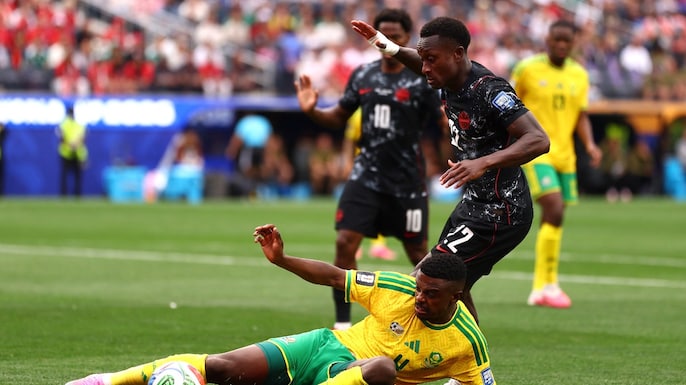
Rather than adopting an aggressive, all-out attacking approach, Jesse Marsch’s side focused on maintaining possession, building patiently from the back and forcing South Africa to defend for long periods. The strategy wasn’t designed to produce immediate excitement. Instead, it aimed to wear the opposition down both physically and mentally.
South Africa, however, arrived with a game plan of its own.
Head coach Hugo Broos organized his team into a compact defensive shape that limited Canada’s space in central areas. Every time Canada attempted to play through midfield, multiple South African players quickly closed passing lanes, making it difficult for Jonathan David and the Canadian attack to receive the ball in dangerous positions.
For much of the first half, Canada enjoyed more possession but found very few clear opportunities.
That wasn’t because Canada lacked creativity.
It was because South Africa executed one of its strongest defensive performances of the tournament.
The Canadian players understood that forcing risky passes or becoming impatient would only play into South Africa’s hands. Instead, they continued moving the ball from one side of the pitch to the other, waiting for defensive gaps to appear.
It was a mature performance from a team that has grown significantly under Jesse Marsch’s leadership.
Jesse Marsch’s Influence Is Becoming Clear
Since taking over Canada’s national team, Jesse Marsch has consistently spoken about changing more than just tactics.
His objective has been to change the mentality of Canadian football.
For years, Canada entered major international tournaments hoping to compete respectably against football’s traditional powers. Marsch has encouraged his players to think differently. His message has been clear: Canada should not simply participate—it should believe it belongs among the world’s best teams.
That confidence has gradually become visible on the pitch.
A World Cup win that Canada will remember for generations 🇨🇦 pic.twitter.com/twfGVzbywB
— Sportsnet (@Sportsnet) June 28, 2026
Against South Africa, there were moments when previous Canadian teams might have panicked after failing to score early. Instead, this squad remained disciplined.
Even as the clock continued ticking, players stayed committed to their structure.
Rather than launching hopeful long balls into the penalty area, Canada continued constructing attacks patiently through midfield.
Those decisions reflected a team that trusted both its coach and its identity.
Marsch’s influence could also be seen in Canada’s defensive organization.
Whenever South Africa attempted to launch quick counterattacks, Canada reacted immediately, recovering possession before dangerous situations developed. The team’s pressing remained organized rather than chaotic, allowing Canada to control the overall rhythm of the game.
This balance between patience and intensity has become one of the defining characteristics of Canada’s recent performances.
Stephen Eustaquio Was Controlling More Than The Midfield
Although his stoppage-time goal naturally dominated headlines, Stephen Eustaquio’s impact stretched across the entire match.
The FC Porto midfielder served as Canada’s creative heartbeat.
Whenever defenders looked for an outlet, Eustaquio made himself available.
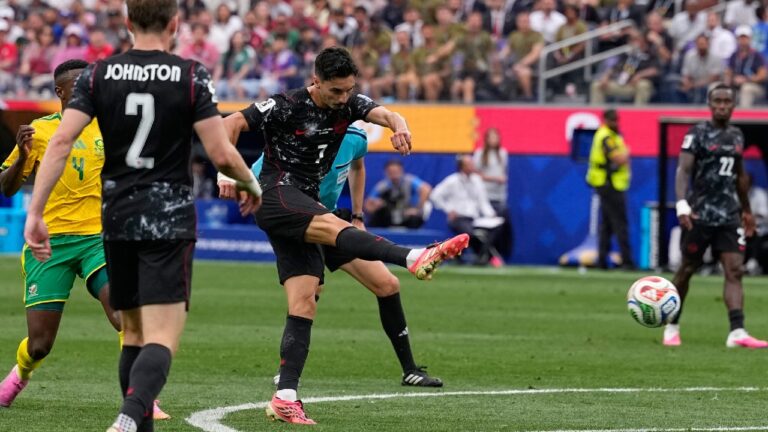
When teammates found themselves under pressure, he calmly recycled possession instead of forcing difficult passes.
His ability to dictate tempo prevented South Africa from disrupting Canada’s rhythm.
Modern football often celebrates goalscorers above everyone else.
Yet coaches understand that matches are frequently won because of players capable of controlling midfield.
Eustaquio repeatedly demonstrated why he has become one of Canada’s most trusted leaders.
His passing range allowed Canada to switch play quickly whenever South Africa overloaded one side of the pitch.
His defensive awareness helped prevent dangerous transitions.
Most importantly, his composure never disappeared, regardless of how tense the match became.
Long before he scored the winning goal, he had already produced one of the strongest midfield performances of the tournament.
Canada’s Biggest Stars Continued To Lead By Example
Stephen Eustaquio was not the only player helping Canada push toward history.

Jonathan David spent much of the match occupying South Africa’s central defenders with intelligent movement that rarely appears in highlight packages. By drifting into different positions, he created space for teammates arriving from deeper areas.

Meanwhile, Alphonso Davies provided another dimension whenever he attacked from wide positions.
Canada’s captain Alphonso Davies comes on in the 75th minute for his first appearance of the 2026 FIFA World Cup 🇨🇦 pic.twitter.com/SYAjwisOIb
— Sportsnet (@Sportsnet) June 28, 2026
Returning after injury concerns, Davies immediately stretched South Africa’s defensive line with his pace and willingness to challenge defenders one-on-one.
Although neither player appeared on the scoresheet, both played an important role in gradually increasing the pressure on South Africa’s defence.
That collective effort reflected how Canada’s national team has evolved.
Rather than relying on a single superstar, this squad now features multiple players capable of influencing matches in different ways.
It is one of the biggest reasons many football analysts believe Canada is entering the strongest era in its men’s football history.
Why The Match Never Felt Like A Typical 1-0 Game
Statistics alone rarely tell the complete story.
Someone looking only at the final score might assume the match lacked excitement.
The reality was far different.
View this post on Instagram
Every passing minute increased the tension inside the stadium.
Every Canadian attack felt increasingly significant.
Supporters understood that one successful move could completely transform the nation’s football history.
South Africa continued defending courageously, refusing to leave unnecessary space despite wave after wave of Canadian pressure.
Canada, meanwhile, never abandoned its tactical discipline.
It became a fascinating battle between patience and resilience.
Eventually, only one side could maintain that concentration long enough to seize the decisive moment.
As stoppage time approached, the atmosphere suggested something extraordinary was about to happen.
Few supporters could have predicted that the defining moment would soon belong to Stephen Eustaquio.
Stephen Eustaquio’s Historic Goal Was About More Than Football
For nearly the entire match, Stephen Eustaquio had quietly gone about his work.
He controlled possession, connected Canada’s midfield to its attack, recovered loose balls and helped maintain the team’s composure whenever South Africa attempted to disrupt the rhythm of play.
Then came the moment that changed everything.
Deep into stoppage time, Canada launched another attack. Rather than forcing an ambitious effort from distance, the team remained patient, moving the ball into a dangerous area before Eustaquio capitalized on the opportunity.
His finish found the back of the net.
Within seconds, Canadian players sprinted toward the corner flag in celebration while supporters erupted inside the stadium. After decades of waiting, Canada had finally reached the FIFA World Cup Round of 16.
It was one of the biggest goals in Canadian football history.
However, for those familiar with Eustaquio’s personal journey, the celebration carried another layer of meaning.
Over the past two years, the Canadian midfielder experienced unimaginable personal loss. His mother, Esmeralda, died in April 2023 following a battle with brain cancer. Just over a year later, his father, Armando, passed away after suffering a heart attack.
To continue competing at the highest level while dealing with that level of grief requires extraordinary resilience.
The winning goal therefore represented more than qualification.
It became a deeply personal tribute to the parents who supported his football dream from childhood.
Jesse Marsch’s Emotional Tribute Resonated Around The Football World
Following the match, Jesse Marsch could have spent his post-match press conference discussing tactics, substitutions or the importance of Canada’s victory.
Instead, he chose to speak about Stephen Eustaquio.
The Canadian head coach reflected on everything his midfielder had experienced away from football and said he believed Eustaquio’s late parents were “looking down” on him during the historic moment.

Those words quickly became one of the most talked-about reactions following Canada’s victory.
Marsch explained that moments like these remind everyone that professional athletes are more than statistics or performances.
Behind every player is a family, a personal journey and experiences that supporters rarely see.
For Eustaquio, scoring the winning goal wasn’t simply another career highlight.
It was the culmination of years filled with both remarkable professional success and heartbreaking personal loss.
That perspective transformed an already historic football moment into one of the tournament’s most emotional stories.
Why This Victory Could Change Canadian Soccer Forever
Regardless of what happens in the Round of 16, Canada’s victory over South Africa has already secured its place in the country’s sporting history.
For years, Canadian soccer has been viewed as a nation with potential.
Now, it has begun producing results on football’s biggest stage.
Success at major tournaments often creates momentum that extends well beyond the players currently wearing the national team jersey.
Young footballers watching across Canada now have another reason to believe that representing their country at the highest level is an achievable dream.
The victory also highlights how much the national team has evolved.
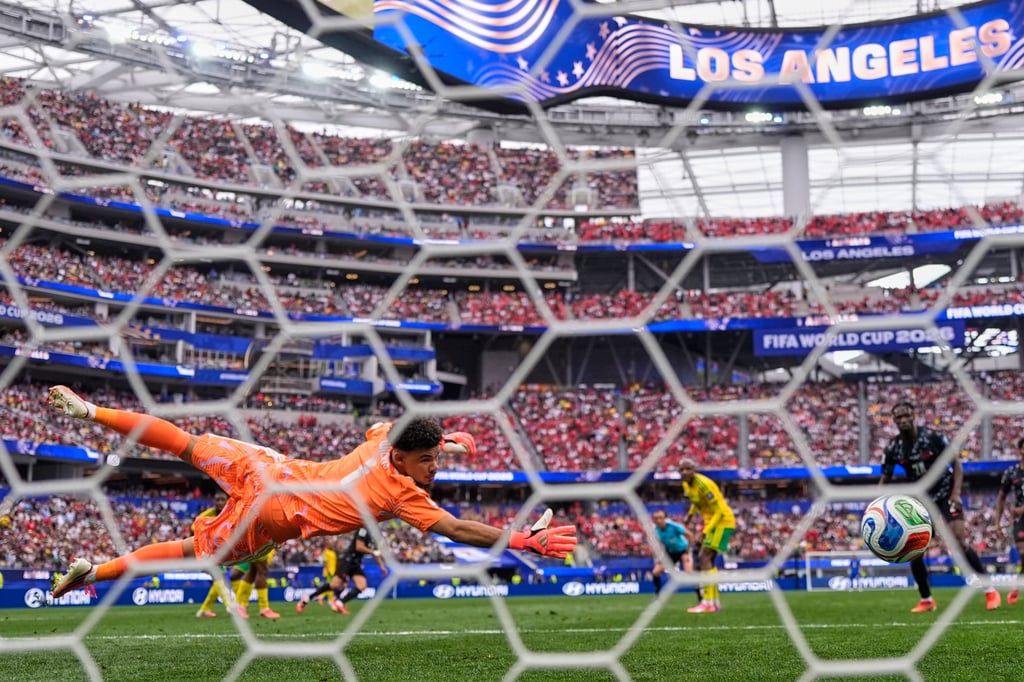
Canada is no longer relying on individual brilliance alone.
It has developed into a balanced squad featuring experienced leaders, emerging stars and a coaching staff capable of preparing the team for football’s biggest occasions.
That combination has many supporters wondering whether this historic victory is simply the beginning of an even greater chapter.
What’s Next For Canada?
Canada’s attention now turns to the FIFA World Cup Round of 16, where the level of competition will increase once again.
Every remaining match becomes more demanding.
Every mistake becomes more costly.
Yet Canada’s performance against South Africa demonstrated several encouraging qualities.
The team remained tactically disciplined.
It stayed emotionally composed.
It trusted its identity even when frustration began to grow.
Those characteristics are often shared by teams capable of making memorable tournament runs.
Whether Canada’s World Cup journey continues for another match or several more, one thing is already certain.
The victory over South Africa has changed how the football world views this Canadian team.
More importantly, it has changed how Canadians may view their own place within international football.
FAQs
Who scored Canada’s winning goal against South Africa?
Stephen Eustaquio scored the dramatic stoppage-time goal that secured Canada’s 1-0 victory and sent the national team into the FIFA World Cup Round of 16 for the first time.
Why is Canada’s victory considered historic?
The win marked the first time Canada’s men’s national team has reached the FIFA World Cup Round of 16.
Why was Stephen Eustaquio’s goal so emotional?
The goal came after Eustaquio experienced significant personal loss, with his mother passing away in 2023 and his father in 2024. Following the match, Jesse Marsch said he believed Eustaquio’s late parents were “looking down” on him during the historic moment.
Who is Jesse Marsch?
Jesse Marsch is the head coach of Canada’s men’s national soccer team and has played a key role in shaping the team’s tactical identity and competitive mindset.
What club does Stephen Eustaquio play for?
Stephen Eustaquio plays for Portuguese club FC Porto while representing Canada at the international level.
Who will Canada play next?
Canada advances to the FIFA World Cup Round of 16, where it will face its next knockout-stage opponent as the tournament continues.
Why is this win important for Canadian soccer?
Beyond reaching the Round of 16, the victory reflects years of growth in Canadian football, from youth development to players competing in Europe’s top leagues. Many see it as a defining moment in the evolution of the men’s national team.
Want more trending stories and celebrity updates? Explore the latest on Trendora Magazine.
Published by Trendora Magazine

Daniel Moore is an entertainment writer at Trendora Magazine, focusing on Hollywood news, celebrity culture, and trending pop culture stories.
Related posts:
 Victor Wembanyama’s Masterclass Keeps Spurs Alive in NBA Finals
 FIFA World Cup 2026 India Rights Drama: Why Broadcasters Hesitated Despite Football’s Growing Popularity
 Cristiano Ronaldo and Portugal Land in Florida Ahead of Historic 2026 FIFA World Cup Campaign
 Cristiano Ronaldo Ready for World Cup: The One Dream He Still Hasn’t Achieved